





Morocco's Sensory Symphony: Where Ancient Medinas Meet Sahara Sunrises
Morocco announces itself through your senses before your mind catches up: the call to prayer echoing across terracotta rooftops at dawn, the smell of cumin and coriander in every breeze, the riot of colors in spice pyramids and textile stalls, the taste of mint tea poured from impossible heights, the feeling of getting completely, wonderfully lost in medina alleyways where GPS surrenders and intuition takes over.
This North African kingdom—perched at the crossroads of Africa, Europe, and the Arab world—offers travelers something increasingly rare: genuine culture shock in the best possible way. It's close enough to Europe for easy access (three hours from London, two from Madrid) but different enough to feel like stepping through a portal into another century, another aesthetic, another way of organizing daily life.
Most visitors follow the classic circuit: Marrakech's Jemaa el-Fnaa square, the blue streets of Chefchaouen, maybe a desert tour to the Sahara. These are spectacular and worth every moment. But Morocco reveals deeper layers to those willing to navigate its complexity—understanding how to bargain without stress, when to say yes to invitations and when to politely decline, how to eat with your hands properly, and why getting lost might be the best thing that happens to you.
This is Morocco beyond the Instagram shots—still beautiful, still exotic, but with practical wisdom that transforms confusion into confidence and makes your journey infinitely richer.
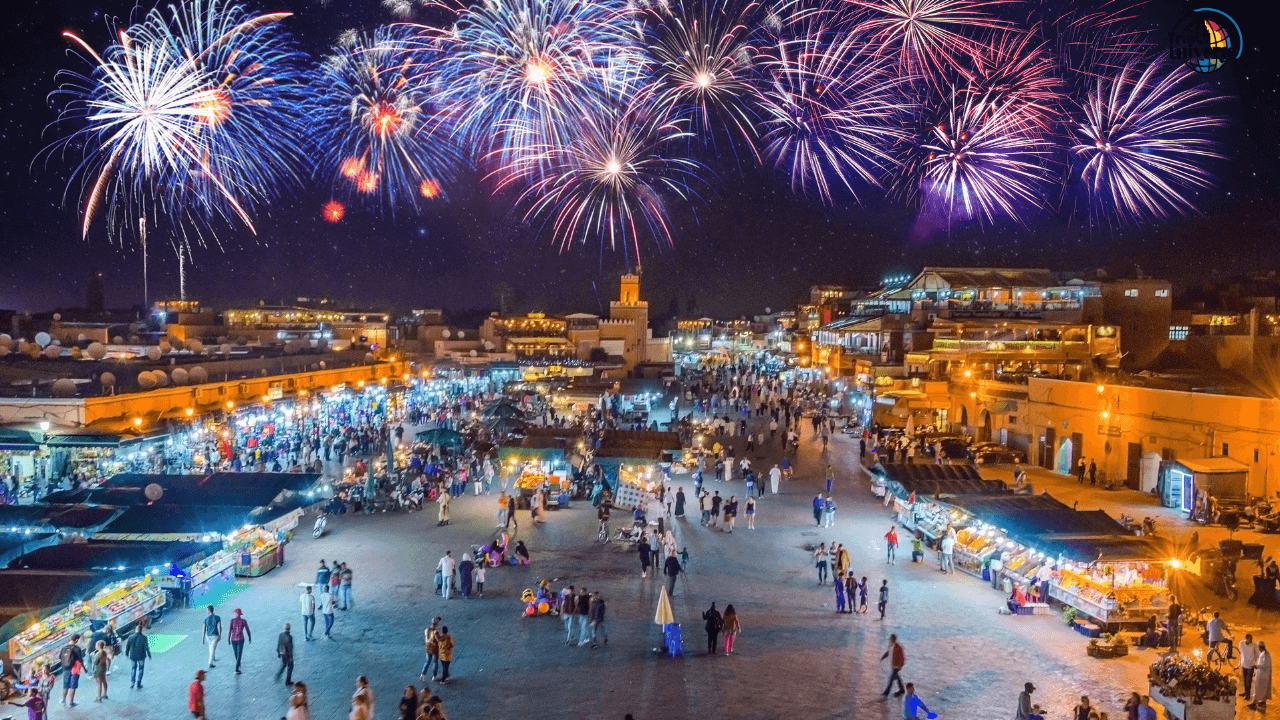
Navigate the Medina Like a Pro (And Embrace Getting Lost)
Every Moroccan city has a medina—the old walled city, a labyrinth of narrow alleyways where cars can't go, where buildings lean toward each other blocking sunlight, where every turn reveals something unexpected: a hidden mosque, a workshop where craftsmen hammer copper, a dead-end that forces you back, a sudden opening onto a fountain-centered square.
First rule: you WILL get lost. Accept this. The medinas weren't designed for navigation—they evolved organically over centuries, deliberately maze-like for defense. Modern mapping apps struggle with the narrow, winding passages. This is fine. This is part of the experience.
Start in Marrakech's medina, the most tourist-friendly. Enter through Jemaa el-Fnaa square (the main square, your reference point—return here when disoriented). Venture into the souks (markets), which are loosely organized by craft: textile souk, metalwork souk, leather souk, spice souk, carpet souk.
Here's how to navigate:
Use landmarks, not street names (streets often don't have signs): "turn left at the carpet shop with the blue door, right at the fountain"
The medina slopes—in Fez, downhill leads to the tanneries and the river; uphill leads back to the main gates
Follow the flow of people during prayer times—they're heading to mosques, which are good orientation points
When truly lost, say "Jemaa el-Fnaa?" and point questioningly—someone will point the direction
Hire a guide for your first day (official guides wear badges)—they'll teach you the layout and you can explore independently after
Getting lost becomes adventure rather than anxiety when you have time, water, and the right attitude. Some of my best Morocco memories are accidental: stumbling into a neighborhood bakery where women brought dough to be baked, finding a rooftop café with perfect medina views, discovering a tiny workshop where an elderly man carved wood using techniques unchanged for centuries.
That said, know when you need help: if it's getting dark, if you're feeling unsafe, or if you've been circling for an hour, ask for directions or pay a young person 20-50 dirhams to walk you back to a main landmark. Moroccans are generally helpful, though some will expect small payment for assistance.
Master the Art of Bargaining (Without Stress or Guilt)
The souks operate on bargaining culture—prices aren't fixed, negotiation is expected, and the dance between seller and buyer is as much social interaction as economic transaction. For many Western tourists, this feels uncomfortable. Here's how to navigate it confidently.
First, understand: bargaining isn't confrontational—it's collaborative. The seller wants to make a sale, you want a fair price, and both of you want to feel good about the transaction. It's theater, with both parties playing roles.
The basic process:
Express interest in an item (don't touch or show too much enthusiasm initially)
Ask the price
The seller quotes high (often 3-4x what they'll actually accept)
You counter low (50-60% of their price is reasonable)
They act shocked, explain the quality, reduce slightly
You increase slightly, explain your budget constraints
This continues until you meet somewhere in the middle—usually 40-50% of the initial asking price
Practical tips:
Never bargain for something you won't buy—it's rude to waste sellers' time
Don't get emotional or insulted by high opening prices—it's just the game
Walk away if the price isn't right—often, sellers will call you back with a better offer
Bargain in good humor—smile, joke, keep it light
Know roughly what things should cost (ask your riad host for guidance)
Pay in dirhams, not euros or dollars (you'll get a worse exchange rate from vendors)
Items worth bargaining for: textiles, carpets, leather goods, crafts, spices, pottery. Don't bother bargaining for: food in restaurants, hammam services, official guides, transportation with posted prices.
A few phrases in Arabic or French help:
"Shukran" (Arabic: thank you)
"Shwiya" (Arabic: a little—as in "the price is too high, lower it a little")
"La shukran" (Arabic: no thank you)
"C'est combien?" (French: how much?)
"C'est trop cher" (French: it's too expensive)
Remember: if you pay more than a local would, that's okay. You're supporting craftspeople and their families. The goal isn't to win bargaining but to pay a price both parties feel good about. I usually aim for a transaction where I feel I got a good deal and the seller seems genuinely happy with the sale—that's success.
Eat Tagine (The Right Way) and Discover Morocco's Food Soul
Moroccan cuisine is one of the world's great food traditions—aromatic, complex, balancing sweet and savory, influenced by Berber, Arab, Moorish, and Mediterranean traditions. And while tagine (the iconic cone-shaped clay pot and the slow-cooked stew made in it) appears everywhere, eating well in Morocco requires knowing where and what to order.
For the best food, avoid restaurants on Jemaa el-Fnaa square (tourist traps with mediocre food). Instead:
Eat at local restaurants frequented by Moroccans—look for places with no English menu, where families and workers eat. Order tagine (chicken with preserved lemon and olives is classic), couscous (traditionally served Fridays), harira (hearty soup with lentils, chickpeas, and tomatoes), or pastilla (savory-sweet pie with pigeon or chicken, almonds, and cinnamon).
Try a riad's home-cooked meal—many riads (traditional houses converted to guesthouses) offer dinner. This is often the best food you'll eat: authentic, carefully prepared, served in beautiful surroundings.
Visit the Medina's hole-in-the-wall eateries—tiny places serving workers and locals. Point at what looks good (menus often don't exist). It's cheap (30-50 dirhams), delicious, and genuinely local.
Explore street food carefully—freshly grilled meat skewers, msemen (flatbread) with honey, snail soup (yes, really—a Marrakech specialty), sardine sandwiches. Follow crowds, choose vendors with high turnover, and trust your instincts.
How to eat Moroccan-style:
Bread is your utensil—tear pieces and use them to scoop tagine, salads, etc.
Eat with your right hand only (left hand is considered unclean)
In communal tagine dishes, eat from the section in front of you, not across the pot
Couscous is often rolled into small balls with your fingers before eating
Mint tea comes at the end—three glasses is traditional ("the first glass is gentle as life, the second strong as love, the third bitter as death")
Essential dishes beyond tagine:
Zaalouk (eggplant and tomato salad)
Taktouka (pepper and tomato salad)
Bissara (fava bean soup, breakfast staple)
Mechoui (slow-roasted lamb)
Rfissa (shredded msemen with chicken and lentils, traditionally served to new mothers)
Pastries: chebakia (honey cookies), ghriba (almond cookies), sellou (sweet almond paste)
Mint tea deserves special mention—it's Morocco's social lubricant, offered constantly, poured from height to create foam. Always accept at least one glass when offered—refusing is mildly impolite. The sugar content is shocking (basically liquid candy), but it's delicious and becomes addictive.
Experience the Hammam (Without Awkwardness)
The hammam (traditional bathhouse) is central to Moroccan culture—a place for deep cleaning, socializing, relaxation, and ritual. There are two types: tourist hammams (spas with English-speaking staff, expensive, gentle) and local hammams (basic, cheap, intense, authentic).
For first-timers, a tourist hammam is fine—places like Hammam de la Rose in Marrakech or Les Bains de Marrakech offer the experience with Western comfort levels. You'll get: steam room time, black soap scrub (savon noir), vigorous exfoliation with a kessa mitt (prepare to be amazed by how much dead skin comes off), clay mask, and massage. It costs 200-400 dirhams and takes 1-2 hours.
For the authentic experience, visit a neighborhood hammam—locals pay 10-20 dirhams. Here's what to know:
Bring supplies: black soap, kessa mitt (exfoliating glove), your own towel, flip-flops, shampoo. These are sold at any pharmacy or shop near hammams.
Gender separation: hammams are strictly divided—men and women have separate times or separate areas. Check the schedule.
What to wear: Men wear underwear; women wear underwear or go topless (you'll be in a room with only other women). Bring a towel for coverage when moving between rooms.
The process:
Pay at entrance, leave clothes in the changing area
Enter the warm room to acclimate
Move to the hot room (very hot, lots of steam)
Sit/lie on the floor until you're thoroughly sweated
Apply black soap, let it sit
Rinse, then scrub vigorously with the kessa mitt—dead skin rolls off in shocking amounts
Rinse again, possibly apply clay mask
Return to cooler room to recover
Some people go through this cycle multiple times
At local hammams, you scrub yourself or bring a friend to help with hard-to-reach areas. Some have attendants (called tayabas for women) who will scrub you for a tip (50-100 dirhams).
The hammam is intense—hot, steamy, full-body scrubbing—but you emerge feeling incredibly clean and relaxed. It's a uniquely Moroccan experience, and even if it's uncomfortable at first, it's worth doing at least once.
Journey to the Sahara (And Spend a Night Under the Stars)
The Sahara Desert—specifically the Erg Chebbi dunes near Merzouga—is a highlight for many visitors. The classic tour from Marrakech takes 3 days/2 nights, crossing the Atlas Mountains, visiting kasbahs, and ending with a night in desert camps.
What to expect:
Long drives: Marrakech to Merzouga is 9+ hours. Tours break this up with stops at Aït Benhaddou (famous kasbah, used in films like Gladiator), Dades Gorge, and Todra Gorge.
Camel trek at sunset: You'll ride camels into the dunes (about 1-hour trek) to reach the camp. The camels are slow, swaying, uncomfortable but manageable—embrace it.
Desert camp: Ranges from basic (Berber tents, simple meals, shared bathrooms) to luxury (private tents, proper beds, en-suite bathrooms). Both offer the same stars.
The night sky: This is the payoff—darkness so complete that the Milky Way is a bright river of stars, planets visible with naked eyes, shooting stars common. Bring warm layers—desert nights are cold.
Tips for the desert:
Book through reputable agencies—ask your riad for recommendations
Bring: sunscreen, sunglasses, scarf (protects from sun and sand), warm layers for night, headlamp
Private tours cost more but offer flexibility; group tours are cheaper but follow fixed schedules
Consider 4x4 instead of camels if you have back problems—many tours offer this option
The "sunrise over dunes" photo op requires waking at 5 AM, but it's spectacular
Alternative: if three days is too long, companies offer 2-day tours or even overnight trips from closer bases. You can also drive yourself and arrange camel treks directly in Merzouga (cheaper but requires more planning).
The Sahara delivers on the promise: endless sand dunes, profound silence, stars that make you feel tiny in the best way, and the strange, wonderful experience of sleeping in the desert.
Understand Moroccan Hospitality (And When to Accept Invitations)
Moroccans are genuinely hospitable—invitations to homes for tea, offers to show you around, friendly conversation from strangers are common. This cultural warmth is lovely but can confuse tourists: is this genuine or a setup for requesting money?
The honest answer: both exist. Some Moroccans are purely hospitable. Some are friendly but expect compensation. Some are running scams. Learning to distinguish takes experience, but here are guidelines:
Genuine hospitality looks like:
Invitations from people you've been talking with naturally (not approached by)
Offers with no pressure—they seem pleased if you accept but fine if you decline
Situations where you're clearly not in a commercial zone
Interactions that feel warm and personal, not scripted
Expect to pay when:
Someone approaches you offering to "show you the way"—they're unofficial guides expecting payment (20-50 dirhams is fair)
You're invited into a shop and tea is offered—this is sales technique, not pure hospitality (you can accept and not buy, but it's awkward)
Young men in tourist areas offer friendship and then suggest visiting their "cousin's shop"—you're being steered to businesses that pay commission
Probable scams:
"The medina is closed today" or "there's a festival, follow me"—designed to redirect you to shops
"I'm a student practicing English"—often leads to shop visits
Overly elaborate backstories about family businesses and special prices
Anyone offering marijuana or other drugs—refuse firmly
When genuinely invited for tea:
Accept if you have time and feel comfortable
Remove shoes when entering homes
Bring a small gift if possible (pastries, fruit)
Accept at least one glass of tea
Conversation topics: family, travel, Morocco's beauty—avoid politics and religion unless initiated by your host
It's okay to offer money as you leave ("for the children" is polite phrasing), but read the situation—sometimes refusing money and just expressing heartfelt thanks is more appropriate
Trust your instincts. If something feels off, politely decline and move on. If an interaction feels warm and genuine, embrace it—some of my best Morocco memories are conversations over tea with Moroccans who genuinely wanted to share their culture.
The Moroccan Lesson
Morocco teaches something essential about travel: that discomfort and confusion are gateways to growth, not obstacles to avoid. Getting lost in the medina, navigating bargaining, eating with your hands, adjusting to a different culture's rhythms—these small challenges make you more adaptable, more confident, more open.
The call to prayer that wakes you at dawn says: we organize time differently here. The maze-like medina says: surrender control and trust the journey. The bargaining says: interaction matters more than efficiency. The mint tea ritual says: slow down, sit, connect. The Sahara says: you are small, the world is vast, and both facts are beautiful.
Morocco isn't always easy—it can be overwhelming, occasionally frustrating, sometimes exhausting. But it rewards those who approach it with curiosity rather than expectation, flexibility rather than rigidity, and willingness to embrace difference rather than judge it.
The Morocco in tourist brochures—exotic riads, colorful souks, dramatic landscapes—is all real. But the Morocco that changes you is the one you discover through practice: successfully navigating the medina, bargaining for a carpet and both parties smiling, sharing tea with strangers who become friends, watching sunrise over Sahara dunes, realizing that what felt foreign and overwhelming now feels familiar and beautiful.
Bslama (goodbye in Moroccan Arabic). Take your time. Get lost. Say yes to tea. Trust the journey. You're in Morocco.
Let us know what you think in the comments!
Newsletter
Subscribe to the newsletter and stay in the loop! By joining, you acknowledge that you'll receive our newsletter and can opt-out anytime hassle-free.
© 2026 Travel Universo. All rights reserved.