




Mexico City's 22 Million Secrets: Chaos as a Way of Life
Mexico City announces itself with vertigo. Twenty-two million people sprawled across a drained lakebed at 7,350 feet, ringed by volcanoes, built atop Aztec ruins, sinking incrementally into the clay beneath. It's one of the world's largest cities, and it operates on principles that make no logical sense: traffic that should be impossible somehow flows, informal economies that dwarf the formal sector somehow function, a metropolis built on a lake that no longer exists somehow stands.
Most visitors cling to Roma and Condesa—the gentrified neighborhoods with coffee shops and street art, comfortable and comprehensible. They visit Frida Kahlo's house, eat tacos al pastor, maybe venture to Teotihuacán, and leave thinking they've glimpsed the city.
But Mexico City—chilangos call it simply "el DF" (Distrito Federal) or "la Ciudad" (the City)—reveals itself only to those willing to surrender control, to board a pesero without knowing where it goes, to eat at fondas where menus don't exist, to get thoroughly lost in Tepito or Iztapalapa, to realize that chaos isn't the city's problem but its organizing principle.
This is a place that teaches you to thrive in disorder, to find beauty in overwhelming scale, and to recognize that "safe" and "dangerous" are far more complicated than guidebooks suggest.
Ride the Metro Like Your Life Depends on It
The Mexico City Metro moves 5.5 million people daily through 12 lines and 195 stations. It costs 5 pesos (about 25 cents). It's also a complete sensory assault: packed bodies, accordion players squeezing through cars, vendors selling everything from candy to illegal DVDs, pickpockets working the crowds, murals and archaeological artifacts in certain stations, and a complex social choreography that regulars navigate instinctively.
Here's what tourists miss: the Metro isn't transportation—it's the city's democratic heart, where everyone from businesspeople to domestic workers to street vendors shares the same space, subject to the same delays, breathing the same recycled air.
Start with Line 12, the newest line (opened 2012), which runs elevated through working-class neighborhoods in the south and east. Watch the city unfold below: markets sprawling into streets, self-built houses climbing hillsides, laundry hanging from every available surface, life at maximum density. Get off at Mixcoac and transfer to Line 7 toward El Rosario. You're now crossing the entire city, north to south, through neighborhoods tourists never see.
Exit at random stations and explore. At Merced, you're steps from the city's largest market—a labyrinth of stalls selling everything from medicinal herbs to live chickens. At Pino Suárez, descend to the platform where a small Aztec pyramid sits inside the station—discovered during construction, now casually integrated into commuter flow, people rushing past a 700-year-old temple to catch their train.
The Metro's iconography—designed for a largely illiterate population in 1969—uses symbols instead of just station names: a grasshopper, a bell, a coyote. Learn to navigate by symbols, not words. It's surprisingly effective.
Critical rules: watch your belongings obsessively (pickpockets are skilled professionals), avoid rush hour if possible (7-9 AM, 6-8 PM is sardine-can density), and during rush hour, use the women-only cars if you're female—they exist because groping is, unfortunately, common in packed trains.
But here's what makes the Metro essential: it's how you understand the city's true scale. Mexico City isn't Roma and Condesa. Those neighborhoods are tiny, exceptional, gentrified. The real city is Iztapalapa, Gustavo A. Madero, Ecatepec—vast working-class areas with millions of inhabitants, invisible to tourists but utterly central to the city's identity.
Eat Where Menus Don't Exist
Forget the trendy restaurants where chefs deconstruct pre-Hispanic cuisine for food bloggers. The soul of Mexico City's food culture lives in fondas—small, family-run eateries serving comida corrida (set lunch menus) to workers.
A proper fonda has no menu. You arrive around lunchtime (1-3 PM). The señora running it tells you what she cooked today—maybe caldo de pollo (chicken soup), arroz rojo (red rice), pollo en mole, calabacitas con queso (zucchini with cheese), and frijoles. You nod. She brings everything, plus fresh tortillas. The meal costs 60-80 pesos (about $3-4), includes agua fresca (fruit water), and is almost certainly the best food you'll eat all day.
Find fondas in markets—every neighborhood has its market, and every market has fondas operating out of small stalls with plastic tables and chairs. Mercado de San Juan near the historic center, Mercado Roma in Roma Norte, Mercado Medellín in Roma Sur—but honestly, any neighborhood market works. Look for where construction workers, taxi drivers, and office workers eat. Follow them.
The unwritten rules: greet everyone when you sit ("buenas tardes"), don't expect English, pay when you finish (they keep track mentally—it's astonishing), and always say "provecho" (enjoy your meal) to other diners when you leave.
While you're eating market food, try everything that looks unfamiliar: huitlacoche (corn fungus—sounds disgusting, tastes incredible), chapulines (grasshoppers with chile and lime), chicharrón in salsa verde, quesadillas that in DF specifically often don't include cheese unless you request it (yes, this confuses everyone, no, chilangos don't care), and tamales from the morning vendors who walk through markets with enormous pots balanced on their heads.
Street food deserves its own religion here. Tacos de canasta (basket tacos) sold from bicycle carts—steamed tacos that have been sitting in their own grease for hours, somehow perfect. Tamales from the corner vendor at 7 AM. Elotes (corn on the cob) slathered with mayo, cheese, chile, and lime. Tlacoyos (oval masa cakes stuffed with beans). Tortas at any of the city's legendary torterías—Tortas El Turco, Tortas Don Polo—where the sandwiches are architectural marvels of meat, avocado, cheese, beans, and chiles.
The secret: trust your nose and your eyes. If food smells good and locals are eating it, it's probably safe. The cleanest-looking tourist restaurants have made plenty of people sick. Street food vendors depend on repeat customers—they can't afford to poison their neighbors.
Navigate by Volcano
On rare clear days (usually after rain, mostly in winter), you see what the Aztecs saw: two enormous snow-capped volcanoes on the horizon—Popocatépetl and Iztaccíhuatl, 17,000+ feet tall, looming over the valley.
The Aztecs built Tenochtitlán—Mexico City's predecessor—precisely oriented to these volcanoes. The Spanish built their colonial city on top. Modern Mexico City has sprawled in every direction, but the volcanoes remain, both literally and metaphorically central to the city's geography and mythology.
Use them as navigation. Popo (as locals call Popocatépetl) lies southeast. When you can see the volcanoes, you can orient yourself—something essential in a city this vast and confusing. Locals give directions like: "head toward Popo" or "the restaurant is on the side facing Iztaccíhuatl."
The volcanoes also remind you that this city exists precariously. Popo is active—it regularly puffs ash, occasionally forces evacuations. Mexico City sits in a seismic zone that has produced devastating earthquakes (1985, 2017). The ground literally sinks—buildings tilt, streets develop sudden waves, the city descends centimeters per year because it's built on a drained lake and the underground aquifer is being depleted.
This precariousness shapes chilango psychology: if the ground beneath your feet is unstable, if a volcano might erupt, if the Big One might hit tomorrow, you learn to live fully now, to extract maximum joy from the present, to not take stability for granted.
Visit the south—Xochimilco, Milpa Alta—where the volcanoes dominate the view. These areas feel more like rural villages than megalopolis, with stone streets, small plazas, churches that predate the Conquest. On Sundays, families gather in the jardines (town squares), vendors sell elotes and esquites, bands play, and the volcanoes watch over everything, as they have for millennia.
Embrace Ambulantaje: The Informal Economy
Mexico City has an estimated 2 million street vendors—the ambulantes. They sell everything, everywhere, always: phone chargers on the Metro, tacos on street corners, pirated DVDs in Tepito, artesanías in Coyoacán, clothing in Lagunilla, toys in Alameda. The formal economy—shops, malls, corporations—is dwarfed by this vast, adaptive, technically illegal but totally tolerated parallel system.
Understanding ambulantaje is understanding Mexico City. When formal employment doesn't exist for millions, people create their own economy. It's not picturesque—it's survival capitalism, exhausting and precarious. But it's also remarkably functional and reveals Mexican ingenuity at its finest.
Visit Tepito, the neighborhood that ambulantaje built. It's famous as dangerous—and yes, it's controlled by organized crime, and yes, tourists get robbed. But it's also a massive market where you can buy literally anything: knockoff designer goods, smuggled electronics, stolen phones (don't buy these), auto parts, DVDs of movies still in theaters, pets, furniture, car stereos removed the night before.
Go with a local if possible, or at least in daylight, and don't bring valuables. Wander the narrow passages between stalls. Watch the logistics: goods arriving, being distributed, sold, money flowing through a system that operates entirely outside banks, taxes, or regulation. It's capitalism stripped to its essence—pure supply and demand with no overhead.
Then contrast this with Santa Fe—the wealthy western neighborhood of glass towers, corporate headquarters, and shopping malls. It's First World sleek, completely gated, utterly disconnected from the city around it. The juxtaposition—Tepito's chaos and Santa Fe's order, both existing in the same city, same moment—is Mexico City in miniature: extreme wealth and extreme informality, separated by minutes but worlds apart.
The lesson isn't to romanticize poverty or criticize wealth, but to recognize that Mexico City contains multitudes—it's simultaneously Global North and Global South, First World and Third World, ordered and chaotic, and those contradictions aren't problems to solve but realities to navigate.
Witness the Danza at Zócalo
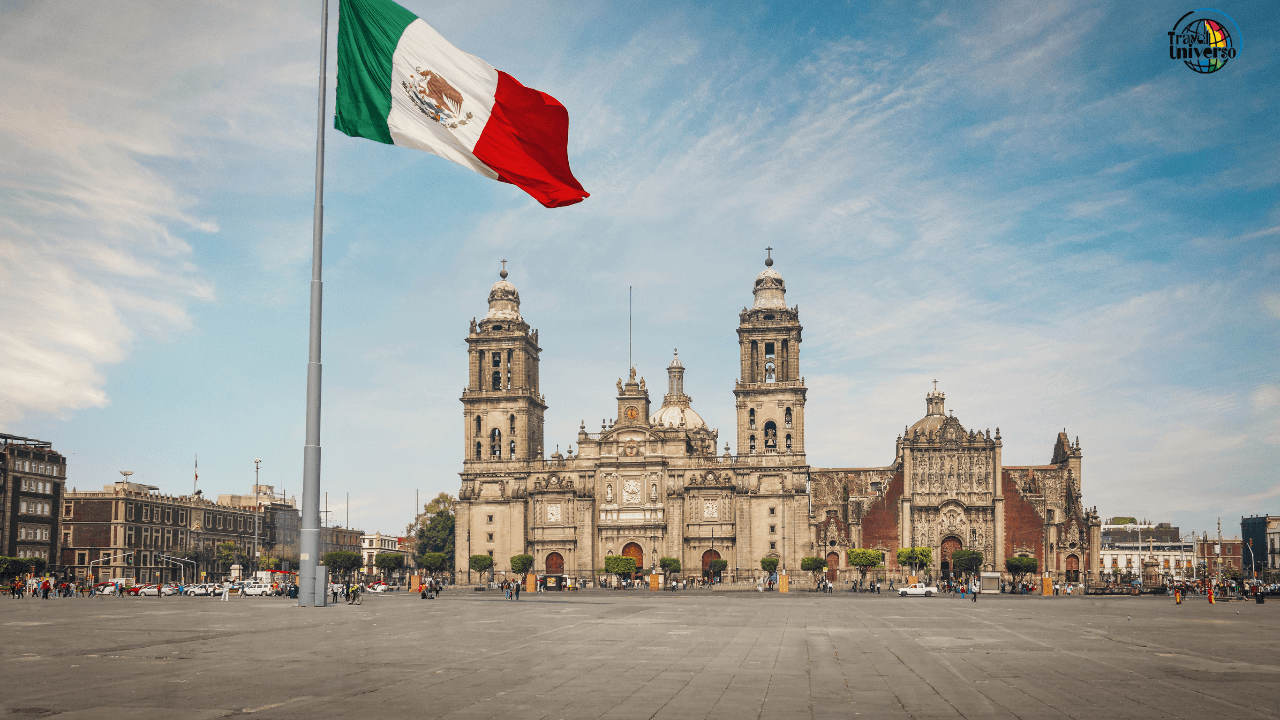
The Zócalo—officially Plaza de la Constitución—is one of the world's largest public squares, built atop the ceremonial center of Tenochtitlán, surrounded by the Cathedral, National Palace, and ruins of the Templo Mayor. Every guidebook mentions it.
What they don't mention: on weekends, particularly Sundays, Aztec dancers perform traditional dances on the plaza's northern side, and it's one of the strangest, most fascinating cultural phenomena in the city.
These aren't professional performers for tourists. They're groups—concheros—practicing a syncretic spiritual tradition that blends pre-Hispanic beliefs with Catholicism. They dress in elaborate "Aztec" costumes (eagle feathers, jaguar skins, beadwork), burn copal incense, and dance for hours to drumming and flutes.
Some are genuinely indigenous, maintaining traditions passed down through generations. Others are mestizos reconstructing what they believe Aztec culture was. Some are deeply spiritual. Others are weekend warriors playing dress-up. The whole scene is simultaneously authentic and constructed, ancient and modern, sacred and performative.
Sit on the Cathedral steps and watch. The dancers move in circles, stomping in rhythm, arms raised, costumes glittering. Tourists photograph them. Locals walk past barely noticing. The juxtaposition is very Mexico City: profound and absurd, meaningful and theatrical, impossible to categorize.
This is also where you'll see the city's other subcultures: skaters using the plaza as their park, punks drinking on the steps, evangelical preachers shouting, vendors selling everything, police watching, families with kids, homeless people sleeping, protest encampments demanding government action.
The Zócalo is Mexico City's stage—everything happens here, nothing is forbidden, chaos is expected. It's democracy as performance art, public space at maximum capacity, the heart of a city that's too big, too complex, too contradictory to fit any simple narrative.
Drink Pulque in a Pulquería
Pulque—fermented maguey sap—is Mexico's ancient alcohol, predating the Spanish by millennia. It's viscous, slightly sour, milky-looking, mildly alcoholic, and utterly unlike beer, wine, or spirits. For centuries, it was the working-class drink. Then beer companies nearly killed it. Now it's having a hipster revival.
But forget the trendy pulquerías in Roma. Find an old-school pulquería—they're dying breed, mostly in working-class neighborhoods, recognizable by saloon-style swinging doors and hand-painted signs.
Pulquerías traditionally didn't allow women (seriously, until the 1970s), had sawdust floors, and served pulque in liter jars to men who'd been drinking there for decades. The old ones that survive maintain that atmosphere: dim, male-dominated, slightly seedy, utterly authentic.
Try La Nuclear in the historic center, La Risa in Coyoacán, or Las Duelistas (one of the few that always welcomed women). Order pulque natural (plain) first to taste the base—it's funky, slightly thick, with a faint sweetness and sour tang. Then try the curados—pulque mixed with fruit (guava, mango, piñon, oatmeal—yes, oatmeal pulque is a thing).
Pulque doesn't keep—it ferments quickly and must be consumed within days. This is why it never became a commercial product like tequila or mezcal. It's inherently local, small-scale, artisanal by necessity.
Drinking pulque connects you to a continuity: this is what Aztec laborers drank, what colonial workers drank, what your taxi driver's grandfather drank. In a city that's constantly destroying and rebuilding itself, pulque represents a thread that reaches back to before there was a Mexico City, when this was still Tenochtitlán, still surrounded by lakes, still indigenous.
Lose Yourself in Doctores at Night
Doctores—the neighborhood named for its streets (Doctor Vértiz, Doctor Lavista)—embodies Mexico City's gritty authenticity. It's working-class, slightly seedy, full of cantinas and street life, home to Arena México where lucha libre (Mexican wrestling) happens multiple times weekly.
Attend a lucha libre match. Not as kitsch tourism but as genuine spectator sport. Arena México seats thousands. Tickets are cheap (100-300 pesos). The crowd is families, kids, elderly folks, hardcore fans who've been coming for decades. The wrestlers—in elaborate masks and capes—are legitimate athletes performing high-flying acrobatics and melodramatic storylines: técnicos (good guys) versus rudos (bad guys), honor and betrayal, generations-old rivalries.
The spectacle is half wrestling, half theater. The crowd chants, throws trash at rudos, cheers técnicos, gasps at big moves. Kids worship the luchadores like superheroes. It's entirely earnest and completely absurd, and everyone understands both truths simultaneously.
After the match, wander Doctores. The neighborhood comes alive at night: tacos stands everywhere, cantinas spilling music onto streets, characters emerging—trans women, hustlers, night-shift workers, insomniacs, people for whom night is day.
This isn't "safe" in a guidebook sense. It's also not as dangerous as tourists imagine. Mexico City's danger is specific: don't flash wealth, don't wander drunk and alone, be aware of surroundings, trust your instincts. But most crime targets locals, not tourists, and most neighborhoods—even rough ones—have internal codes and boundaries.
Doctores at 11 PM teaches you that Mexico City never sleeps, that there's always someone selling tacos, that public space belongs to everyone, and that "dangerous" neighborhoods are full of families, workers, and ordinary people living their lives, not waiting to victimize tourists.
The Lesson Mexico City Teaches
If Istanbul teaches keyif, Thailand teaches sanuk, Vienna teaches Weltschmerz, and Scotland teaches thrawnness, Mexico City teaches something both darker and more joyful: the art of thriving in chaos, of finding order in disorder, of extracting beauty from overwhelming scale and contradiction.
This is a city that shouldn't function—too big, too polluted, too unequal, built on unstable ground in a seismic zone with inadequate water. And yet it works, somehow, through improvisation and informal systems, through millions of individual adaptations, through a collective acceptance that chaos is the baseline and order is the exception.
You learn this by riding the Metro at rush hour and somehow arriving at your destination. By eating at fondas where nothing is written down but you're fed perfectly. By navigating streets with no logic, where addresses make no sense, where you orient by volcanoes and landmarks. By watching ambulantes create an entire economy from nothing. By attending lucha libre where fake fighting reveals real truths about heroism and mythology.
Mexico City doesn't offer easy comfort. It's loud, polluted, overwhelming, chaotic, and often frustrating. But it also offers something rare: a glimpse of humanity at maximum density and creativity, where 22 million people have built a megacity through sheer collective will, where contradictions don't cancel each other out but coexist, where beauty and dysfunction are inseparable.
The Mexico City in guidebooks—Frida's house, the Zócalo, Teotihuacán—is real but incomplete. The real city is the fondas and pulquerías, the Metro at rush hour, Tepito's markets, Doctores at midnight, the volcanoes watching over everything, the daily miracle of 22 million people making it work against all odds.
And it's been there all along, just beyond Roma and Condesa, waiting for those willing to get lost, to surrender control, to accept that chaos isn't the city's flaw but its defining feature, its greatest challenge and its most remarkable achievement.
Let us know what you think in the comments!
Newsletter
Subscribe to the newsletter and stay in the loop! By joining, you acknowledge that you'll receive our newsletter and can opt-out anytime hassle-free.
© 2026 Travel Universo. All rights reserved.