




Hong Kong's Vertical Symphony: Where Mountains Meet Skyscrapers and Dim Sum Meets the Sky
Hong Kong doesn't just sprawl—it soars, digs, and climbs. This is a city that ran out of horizontal space decades ago and decided to build upward, downward, and into the hillsides instead. The result is a place where residential towers rise 80 stories, restaurants hide on the 23rd floor, hiking trails start steps from subway exits, and you can travel from underground shopping mall to rooftop bar without ever touching street level.
Understanding Hong Kong means learning to think vertically, to read the city in layers rather than blocks, and to embrace the beautiful chaos of seven million people living in a space smaller than Los Angeles. This guide helps you navigate Hong Kong's dimensional complexity and discover why this compact powerhouse remains one of the world's most electrifying destinations.
Reading the Layers: Hong Kong's Vertical Logic
Most cities exist primarily on one level—the street. Hong Kong exists on at least five simultaneous levels at any given location, and learning to navigate these layers is the key to understanding the city.
The Underground City
Hong Kong's MTR (subway) stations aren't just transportation—they're sprawling underground cities with shopping malls, restaurants, and connections to dozens of buildings. You can walk kilometers underground, passing through multiple stations and buildings without surfacing. The Central, Admiralty, and Tsim Sha Tsui stations form particularly extensive underground networks.
The Street Level
This is where most tourists spend their time, but ironically it's often the least interesting layer. Streets are narrow, crowded, and somewhat generic. The real action happens above and below.
The Elevated Walkway Network
Many areas, particularly Central and Admiralty, have elevated pedestrian walkways connecting buildings at the second or third floor level. These climate-controlled corridors let you walk between skyscrapers without dealing with street-level traffic and heat. They're not always obvious—look for signs pointing to walkways (often called "flyovers").
The Mid-Levels
Residential and commercial space exists at various heights up the hillsides. The Mid-Levels Escalator, the world's longest outdoor covered escalator system, climbs from Central up the mountain through multiple neighborhoods. It runs downward in the morning (for commuters) and upward from 10am until midnight.
The Peak
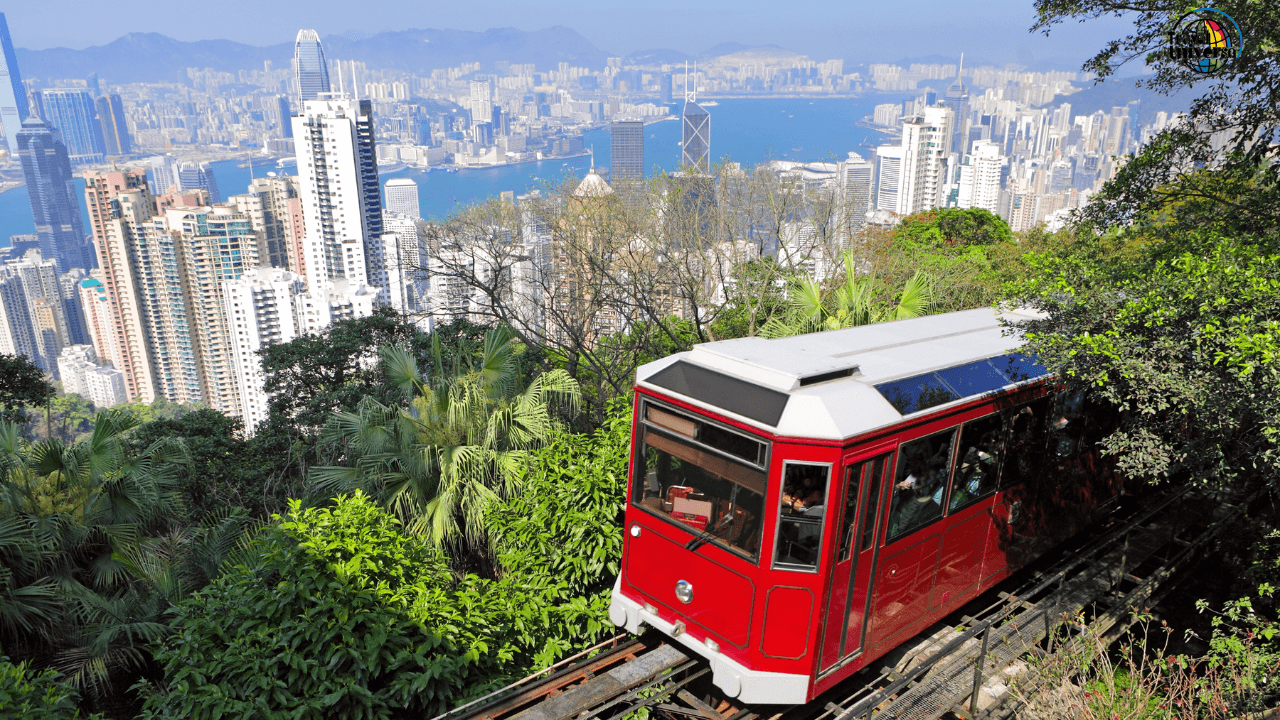
Victoria Peak and other hilltops offer the ultimate Hong Kong perspective—the entire vertical city laid out below you. But "the Peak" also refers to the exclusive residential area at the top, where property prices reach astronomical levels.
The Food Universe: Eating in Three Dimensions
Hong Kong's food scene operates at every altitude, and the location often matters as much as the cuisine.
Dai Pai Dongs and Street Level
Traditional open-air food stalls (dai pai dongs) are disappearing but remain in places like Temple Street and some public housing estates. These casual spots serve authentic Cantonese dishes at ground level where rent is somehow still affordable.
Cha Chaan Tengs: The Everyday Engine
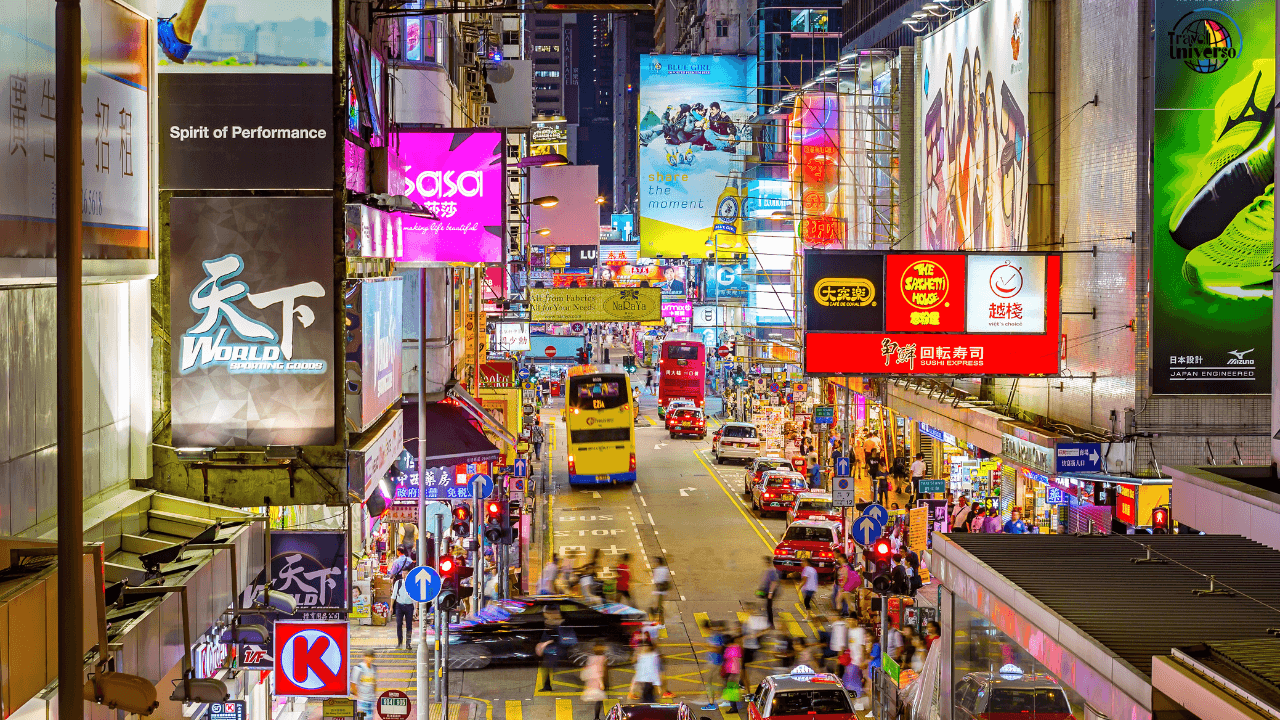
These Hong Kong-style cafes serve fusion comfort food that exists nowhere else: macaroni soup with ham, French toast stuffed with peanut butter, milk tea made with pantyhose-like strainers, and pineapple buns (which contain no pineapple). They're usually tucked into second or third floors of commercial buildings.
Find them by looking up—the signs are often perpendicular to the building rather than parallel to the street. The best ones are crowded with locals during breakfast and lunch rushes.
Dim Sum: The Morning Ritual
Dim sum restaurants operate on a specific schedule—arrive between 10am and 1pm for the full experience. Order by checking boxes on paper menus or, in traditional places, by selecting from trolleys wheeled around the dining room.
Essential dim sum: har gow (shrimp dumplings), siu mai (pork dumplings), char siu bao (barbecue pork buns), cheung fun (rice noodle rolls), and egg tarts. Don't be intimidated—just point at what looks good.
Top tip: Maxim's Palace in City Hall and Lin Heung Tea House offer authentic, chaotic, traditional experiences. Tim Ho Wan, the Michelin-starred dim sum chain, has locations throughout the city.
Sky-High Dining
Some of Hong Kong's best restaurants hide on upper floors of seemingly random buildings. Addresses like "23/F" (23rd floor) are common. This vertical dining extends to rooftop bars offering stunning harbor views—Ozone at the Ritz-Carlton is the world's highest bar, on the 118th floor.
The Transportation Matrix: Moving Through the Layers
The Octopus Card: Your Magic Key
This rechargeable card works on all MTR trains, buses, trams, ferries, and even many convenience stores and restaurants. Get one immediately upon arrival at the airport. You'll tap it dozens of times daily. It eliminates the need to figure out fares and speeds everything up dramatically.
The MTR: Efficient Perfection
Hong Kong's subway is clean, air-conditioned, efficient, and covers most areas tourists want to visit. Trains run every few minutes. Signs are in English and Chinese. Platform screen doors prevent accidents. It's one of the world's best subway systems and should be your primary transportation method.
Download the MTR mobile app for real-time information and journey planning.
The Tram: History in Motion
The "ding ding" trams have run along Hong Kong Island's north coast since 1904. They're slow, charming, incredibly cheap (fixed fare, pay when exiting), and offer ground-level views of neighborhoods. Ride from Kennedy Town to Shau Kei Wan for the full experience. Sit on the upper deck.
The Star Ferry: The Essential Journey
This historic ferry crosses Victoria Harbour between Hong Kong Island and Kowloon. It costs almost nothing, takes about 10 minutes, and offers the classic Hong Kong skyline view. Tourists ride it once; residents ride it daily. Do both. The evening crossing, when buildings light up, is particularly magical.
Buses: For the Adventurous
Double-decker buses go everywhere, including places the MTR doesn't reach. However, routes are complex, announcements aren't always in English, and you need exact fare (Octopus card makes this easy). Buses are essential for reaching certain beaches and hiking trails.
Taxis: Color-Coded Confusion
Three colors serve different areas: red (urban Hong Kong Island and Kowloon), green (New Territories), and blue (Lantau Island). Red taxis are most useful for tourists. They're relatively affordable but drivers often don't speak English. Have your destination written in Chinese or show it on a map.
Nature's Contradiction: Wilderness at the Doorstep
Here's Hong Kong's least-known fact: about 75% of the territory is undeveloped parkland, mountains, and beaches. You can go from skyscraper to hiking trail in 20 minutes.
Dragon's Back Trail
Often rated among the world's best urban hikes, this trail offers spectacular ridge-walking with ocean views on both sides. It's accessible via MTR and minibus, takes about 3-4 hours, and doesn't require serious hiking experience. Go in the morning before heat builds up.
Lantau Island
Home to the airport, Lantau also has the giant Tian Tan Buddha, the Po Lin Monastery, the Ngong Ping 360 cable car, and excellent hiking. The Lantau Trail circles the island. Tai O fishing village on Lantau's west coast feels like a different world—stilt houses, dried seafood, and boat tours to see pink dolphins.
The Outlying Islands
Lamma, Cheung Chau, and Peng Chau are car-free islands with beaches, seafood restaurants, and village atmospheres. They're popular weekend escapes for locals. Ferries depart from Central.
Beaches
Hong Kong has dozens of beaches. Popular ones include Repulse Bay and Shek O on Hong Kong Island, and various beaches in the New Territories and islands. They're genuinely clean and swimmable, which surprises visitors who assume Hong Kong is all concrete.
The Practical Details
When to Visit
October to December offers comfortable temperatures (18-26°C) and low humidity. January to March is cooler but pleasant. April to September is hot, humid, and rainy (especially July-September). Typhoons occur June-November but rarely cause serious tourist disruptions—the city just shuts down for a day.
Money
Hong Kong uses the Hong Kong Dollar (HKD). ATMs are everywhere. Credit cards are widely accepted, but smaller restaurants and shops prefer cash. Tipping isn't customary except in upscale restaurants (10% is appreciated).
Language
Cantonese is the main language, with Mandarin increasingly common. English is widely spoken in tourist areas, hotels, and business districts. MTR announcements and signs are in English. However, many local restaurants, shops, and drivers speak little English. Translation apps help enormously.
Accommodation
Hotels are expensive and small by international standards. Consider staying in Kowloon (cheaper than Hong Kong Island, excellent MTR access). Hostels and Airbnbs offer budget alternatives. Book early—Hong Kong has high occupancy.
Internet and Phones
Free Wi-Fi is available in many locations, including all MTR stations. Purchase a tourist SIM card at the airport or any convenience store for mobile data.
Safety
Hong Kong is extremely safe. Violent crime against tourists is rare. Scams are uncommon. Women can walk alone at night in most areas. The main risks are pickpocketing in crowded areas and aggressive shopkeepers in tourist markets.
What Makes It Work
Hong Kong shouldn't work. It crams seven million people into limited space with extreme density, summer heat that approaches unbearable, and limited natural resources. Yet it does work, remarkably well, because it embraced verticality, invested in world-class public transportation, and created a culture that values efficiency and adaptability.
The magic of Hong Kong is experiencing all these layers simultaneously—sipping morning coffee in a cha chaan teng on the 15th floor while watching sunrise over mountains you could hike this afternoon, then taking the MTR through underground shopping cities to reach a ferry that crosses the harbor to neighborhoods where you'll eat street food for dinner before riding a tram through neon-lit streets that somehow still feel human despite the density.
It's a city that solves impossible problems with creative vertical solutions, where hiking boots and business suits coexist, where ancient traditions persist in ultra-modern settings, and where the most spectacular views are free (from hiking trails and ferries) while luxury exists on every high floor.
Hong Kong rewards visitors who embrace the vertical logic, navigate the layers with confidence, and accept that in the world's most three-dimensional city, the best experiences often require looking up, taking the elevator, or climbing the hill to see what's on the next level.
Get our travel tips, itineraries and guides by email
Sign up for my newsletter!
Name
Let us know what you think in the comments!
Newsletter
Subscribe to the newsletter and stay in the loop! By joining, you acknowledge that you'll receive our newsletter and can opt-out anytime hassle-free.
© 2026 Travel Universo. All rights reserved.